Healthy Soil as a Living Ecosystem
Healthy soil is far more than dirt; it is a vibrant, living ecosystem. When all components of this ecosystem function together, soil becomes a powerful engine of plant growth, nutrient cycling, and long-term fertility. To understand how to manage soil properly, it helps to look at the three essential elements that make up a healthy soil system: biology, chemistry, and physical structure.
- The Living Component: Soil Biology
At the heart of proper soil health is life. Soil is home to an astonishing variety of organisms, from microscopic bacteria to earthworms you can see with the naked eye. These organisms fall into three broad groups:
- Microflora: The foundation of soil biology, including fungi and bacteria. These organisms break down organic matter, unlock nutrients, and form beneficial relationships with plant roots.
- Microfauna: Slightly larger but still invisible to the human eye, including protozoa and nematodes. They help regulate microbial populations and release nutrients in plant-available forms.
- Macrofauna: Larger soil organisms such as insects, beetles, and earthworms. These engineers physically reshape the soil, create channels for air and water, and build stable aggregates.
Every one of these organisms plays a role in maintaining a thriving soil ecosystem.
(A fascinating side note: there are two species of bacteria living inside natural gold nuggets. These microbes use arsenic to carve pathways through the gold, creating wire-like structures they use to communicate. It’s a reminder of just how powerful and surprising soil biology can be.)
- The Chemical Component: Nutrients and Minerals
Soil chemistry is built from minerals broken down into elemental nutrients. These include the full spectrum of essential elements, from major nutrients such as carbon, nitrogen, and phosphorus to a wide range of trace elements needed in much smaller amounts. All these nutrients contribute to the soil’s ability to feed its living community, and ultimately the plants that grow in it.
Fertilisers deliver a single soluble nutrient at a time. But when you activate soil biology, you unlock a wider range of nutrients in situ. Biology unlocks soil chemistry and builds resilience, not just short-term correction.
- The Physical Component: Soil Structure
The physical aspect of soil determines how all the components are held together. The proportions of sand, silt, and clay determine the soil’s texture, which affects:
- Structure
- Bulk density
- Porosity
- Water infiltration
- Air exchange
A healthy structure allows roots, biology, water, and air to move freely, which is essential for a functioning soil ecosystem.
How Soil Biology Unlocks Nutrients and Improves Structure
Biology is the most dynamic part of the soil system. When it thrives, both the chemical and physical qualities of soil improve.
Living organisms break down minerals and organic matter, releasing nutrients in forms plants can absorb. But to do this effectively, biology needs carbon and oxygen, both of which come from plants.
Through photosynthesis, plant roots release exudates, rich in carbon compounds, into the soil. These exudates feed soil microbes, which in turn create channels, pores, and aggregates that:
- Improve aeration
- Increase water infiltration
- Strengthen soil structure
This creates a powerful positive cycle: more biology → better structure → better nutrient cycling → healthier plants → more root exudates → even more biology.
Why Worm Castings Are the Perfect Tool for Better Soil
Worm castings are uniquely effective at restoring and enhancing soil health. Here’s why:
- A Complete Food Source for Soil Biology
Worm castings contain nutrients packaged in stable, humified carbon, exactly what soil biology needs. They are rich in beneficial microbes and signalling molecules that promote good biological activity in the soil.
- A Superior Habitat for Microorganisms
Castings also create a high-quality home for biology to thrive. Their stable humus structure provides:
- Excellent water retention
- Ample oxygen pockets
- A long-lasting environment that supports microbial communities
This combination makes the benefits of worm castings effectively endless: improved structure, increased nutrient availability, better plant growth, resilience to stress, and more.
How to Use Worm Castings Effectively: Apply with Verasoil
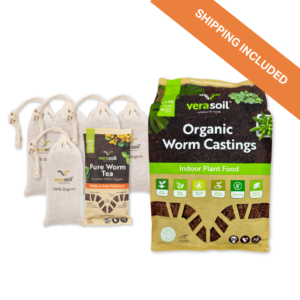
The best results come when worm castings are applied with Verasoil and placed close to plant roots or seeds.
This positions the castings directly within the rhizosphere, the narrow zone of soil surrounding the roots where biology, nutrients, and plant exudates interact most intensely.
Because the rhizosphere is a hotspot of biological activity, placing castings there yields exponential benefits for plant growth, nutrient uptake, and overall soil health.
Soil is a living ecosystem, and biology is the key driver of its health. When biology is supported, soil chemistry and structure naturally improve. Worm castings, mainly when used with Verasoil, provide the food, habitat, and biological stimulus needed to revive and sustain thriving soil life.
Healthy soil grows healthy plants. And healthy plants create a healthy planet.